
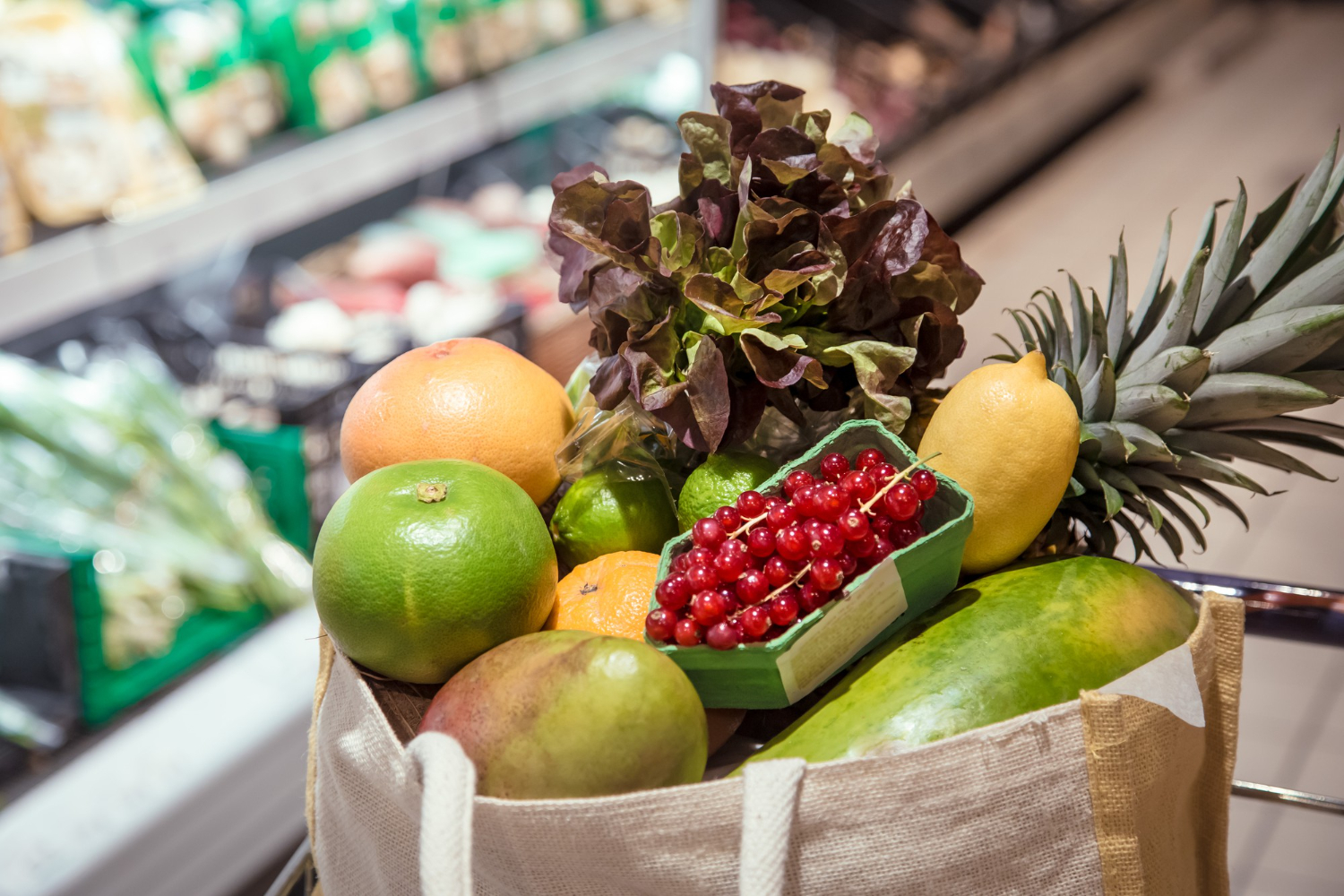
Walking into a grocery store without knowing what you actually need is an easy way to spend more than you planned.
You go in for milk and dinner ingredients. Then you remember you’re low on snacks. There’s a sale on cereal. You see a new sauce you’ve been meaning to try. By the time you reach the checkout, half the items in your cart weren’t on your original list.
The easiest way to avoid this is to know the difference between a grocery essential and everything else.
That doesn’t mean you need to live on rice and beans or stop buying foods you enjoy. It simply means you should know which purchases keep your household fed and which ones are optional.
Once you have that distinction, grocery shopping becomes a lot easier to manage.
So, What Is a Grocery Essential?
A grocery essential is something your household regularly needs to eat, cook, or prepare meals.
It’s food you would replace if you ran out because it plays an important role in your normal routine.
For one household, essentials might include eggs, bread, chicken, vegetables, rice, and coffee.
For another, it might be completely different.
That’s because there isn’t one universal grocery-essential list.
If you never eat bread, bread isn’t an essential for you.
If someone in your household relies on a particular food because of a dietary restriction, that food may be much more important than it would be for another shopper.
The best definition is simple:
A grocery essential is something your household genuinely needs to keep eating normally.
Start With the Foods You Eat Every Week
The easiest way to identify your essentials is to look at your normal eating habits.
Think about the meals you make over and over.
Maybe breakfast is usually eggs and toast. Lunch might be sandwiches. Dinner could rotate between pasta, chicken, tacos, rice bowls, and vegetables.
The ingredients that show up repeatedly are probably your essentials.
This is much more useful than copying someone else’s grocery list.
Your household doesn’t need the same foods as your neighbor, your favorite food blogger, or the person posting their $50 grocery haul online.
Build your list around what you actually eat.
Common Grocery Essentials
While every household is different, certain categories tend to show up in most grocery budgets.
Protein
Protein might come from meat, poultry, fish, eggs, beans, lentils, tofu, dairy, or other foods.
You don’t need every type of protein in your refrigerator.
Choose the ones your household actually eats and that fit your budget.
For example, if eggs, beans, and chicken are staples in your home, those might take priority over more expensive cuts of meat.
Fruits and Vegetables
Fresh, frozen, canned, or dried fruits and vegetables can all fit into a grocery budget.
Don’t assume fresh is automatically better for your budget.
Frozen vegetables can be especially useful because they last longer and can be used whenever you need them.
The important thing is buying produce your household will actually eat.
A bag of expensive salad greens isn’t an essential if it routinely gets forgotten in the refrigerator.
Grains and Starches
Rice, pasta, oats, potatoes, bread, tortillas, and similar foods can form the base of many affordable meals.
You don’t need to buy all of them every week.
Choose the staples that fit the meals your household normally makes.
Dairy and Alternatives
Milk, cheese, yogurt, butter, and dairy alternatives may be essentials depending on your household.
Again, frequency matters.
If you go through a gallon of milk every week, it’s clearly part of your regular grocery budget.
If you buy a specialty cheese once every few months, it’s probably better treated as an optional purchase.
Cooking Basics
Things like cooking oil, salt, pepper, flour, sugar, spices, and basic sauces can be easy to forget because you don’t necessarily buy them every week.
They still matter.
Instead of treating these as weekly essentials, consider them occasional essentials.
You might spend very little on them for several weeks and then suddenly need to replace three at once.
That’s one reason grocery spending can vary from week to week.
Some Essentials Aren’t Food
Depending on how you define your grocery budget, you may also need to account for household products.
Toilet paper, paper towels, dish soap, laundry detergent, cleaning supplies, and personal-care products may all be purchased during a grocery run.
But it can be helpful to keep these expenses separate from your food budget.
Otherwise, buying a large container of detergent can make it look like you suddenly spent too much on groceries when the real issue was a household purchase.
You could have one category for food and another for household essentials.
This makes your budget much easier to understand.
What About Snacks?
Snacks can be a little tricky.
For some households, they’re a regular part of the daily routine. For others, they’re mostly occasional treats.
If your kids take snacks to school every day, those foods may be an essential part of your grocery budget.
If you’re buying expensive cookies because they looked good while you were walking down the aisle, that’s probably an extra.
The difference isn’t necessarily the food itself.
It’s how important it is to your household’s routine.
Coffee Can Be an Essential—Depending on You
Coffee is a good example of why grocery essentials are personal.
Technically, nobody needs coffee to survive.
But if you drink it every morning and plan your grocery budget around buying it, it’s a regular household expense.
There’s nothing wrong with treating it as an essential.
The same could be true of tea, sparkling water, or another beverage you consume regularly.
Budgeting isn’t about deciding which foods are morally acceptable.
It’s about accurately describing your spending.
Don’t Let “Healthy” Automatically Mean “Essential”
Another common mistake is assuming that something is essential simply because it’s healthy.
A $9 bag of specialty granola isn’t necessarily more essential than a $3 container of oats.
A pricey green juice isn’t automatically more important than the vegetables you already buy.
Look at the role the food plays in your diet and the value you’re getting for the money.
Healthy food can absolutely be part of your essentials, but you don’t need to buy the most expensive version of every healthy product.
Sales Don’t Turn Wants Into Needs
Grocery stores are designed to make you buy more.
A brightly colored sale tag can make an optional purchase feel like something you should stock up on immediately.
Before putting a sale item into your cart, ask yourself:
Would I buy this if it weren’t discounted?
If the answer is no, you probably don’t need it.
That doesn’t mean you can’t buy it.
If it’s something you enjoy, you can still choose to spend the money. Just recognize it as an extra rather than convincing yourself that the sale made it essential.
Buy Essentials Before Extras
When you’re working with a limited grocery budget, prioritize your cart.
Start with the ingredients needed for your meals.
Then cover your regular staples.
After that, look at snacks, treats, convenience foods, and other extras.
This gives you a simple rule to follow when your total starts climbing.
If you’ve already spent most of your budget, you know exactly what should stay in the cart and what can wait until next time.
Check What You Already Have
An essential only counts as an essential if you actually need more of it.
Before shopping, check your pantry, refrigerator, and freezer.
You might discover you already have enough rice for several weeks or three unopened cans of the tomatoes you were about to buy.
This is particularly important with pantry staples.
A grocery budget can disappear surprisingly quickly when you repeatedly buy things you already have at home.
A five-minute pantry check can prevent that.
Watch Out for Convenience
Convenience foods can be useful, especially when you’re busy.
Pre-cut vegetables, prepared meals, individually packaged snacks, and ready-to-cook ingredients can save time.
But convenience and necessity aren’t the same thing.
If you’re trying to lower your grocery spending, look at convenience purchases first.
Ask whether you’re paying extra because the product genuinely solves a problem or simply because you didn’t want to spend a few more minutes preparing it.
Sometimes the convenience is worth every penny.
Sometimes it isn’t.
Create Your Own Essential Grocery List
Rather than relying on a generic list, make one specifically for your household.
Divide it into a few simple categories:
Weekly essentials:
Foods you buy regularly, such as milk, eggs, fruit, vegetables, bread, or protein.
Occasional essentials:
Items you don’t buy every week but regularly need, such as cooking oil, flour, spices, or cleaning products.
Optional extras:
Treats, specialty foods, impulse purchases, and things you can skip when money is tight.
Once you’ve created these categories, grocery shopping becomes much simpler.
You know what needs to be replaced, what can wait, and what is completely optional.
Your Essentials Can Change
Don’t assume your grocery list has to stay the same forever.
Households change.
A child starts eating more. Someone begins working from home. You change your diet. You start cooking more often. Your schedule gets busier.
All of these things can change what counts as an essential.
Review your grocery habits every few months.
If something is consistently part of your routine, it probably belongs in your regular budget.
If you’re buying something less often, move it to an occasional category.
If you haven’t bought something in months, it probably doesn’t need to be on your essential list at all.
The Goal Is a Grocery Budget That Reflects Real Life
There’s no perfect grocery-essential list.
What matters is creating one that reflects how your household actually eats.
Start with the foods you rely on every week. Add the ingredients you need to make your regular meals. Account for dietary requirements and household staples. Then separate the things you simply enjoy from the things you genuinely need.
You don’t have to stop buying treats.
You don’t have to eliminate convenience foods.
And you definitely don’t have to make every grocery trip as cheap as possible.
You just need to know where your money is going.
When your essentials are covered first, you can spend whatever remains on the extras you enjoy without wondering whether you’ve just blown your entire grocery budget on things you didn’t really need.