When people try to create a grocery budget, they usually think about the big stuff first.
Meat. Vegetables. Bread. Milk. Rice. Pasta. Maybe a few dinners for the week.
Then there are the little things.
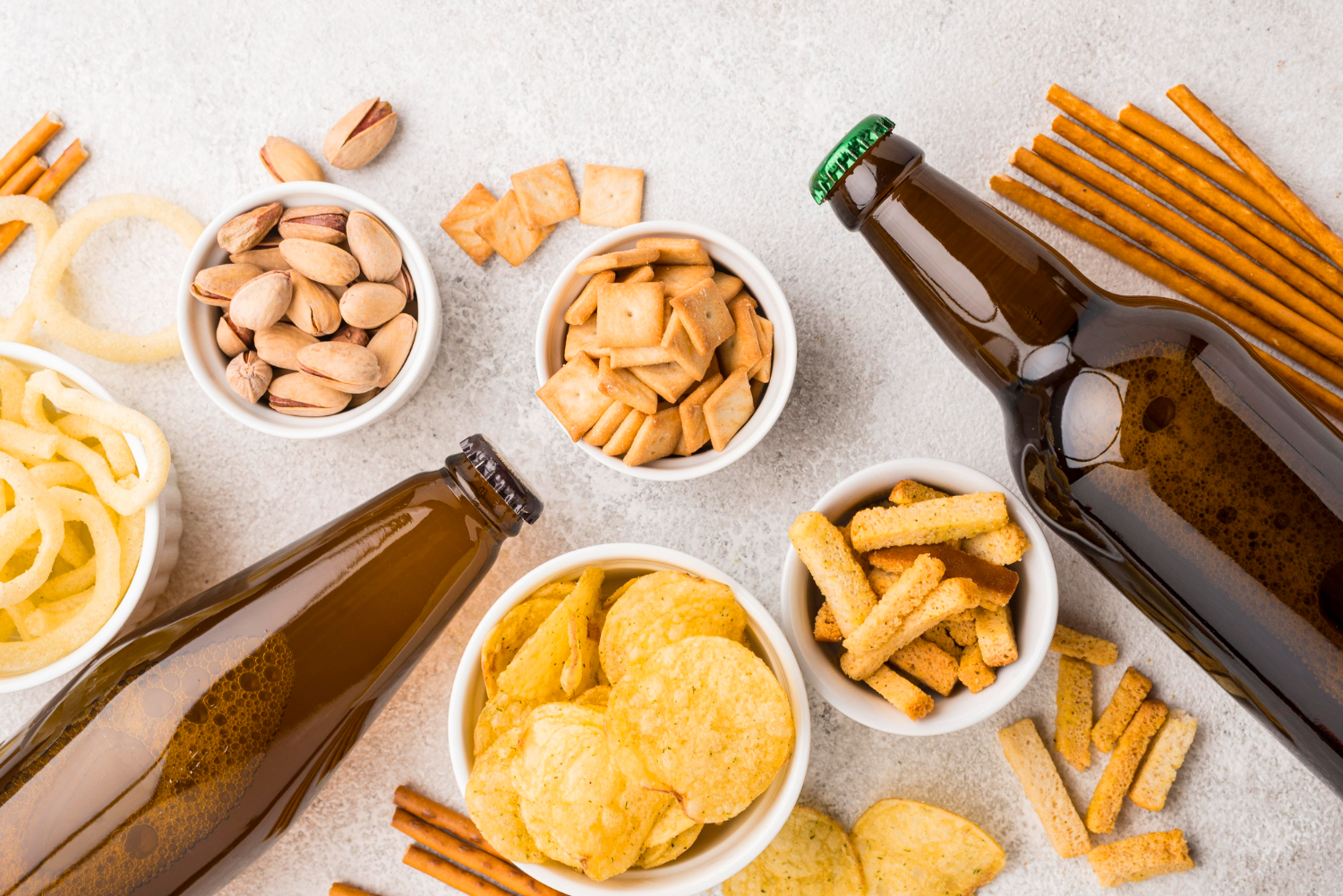
A bottle of soda. A bag of chips. A couple of protein bars. A coffee drink. Some cookies because everyone wants something sweet.
None of those purchases seems like a big deal on its own.
But when you add them all together, those “small” grocery expenses can take a surprisingly large bite out of your budget.
The solution isn’t to stop buying snacks or pretend drinks don’t count. It’s to actually account for them.
Small Purchases Are Still Part of Your Grocery Budget
This sounds obvious, but it’s easy to forget.
If your grocery budget is $500 a month, that $500 needs to cover the food your household actually buys.
If you spend $50 of it on snacks and drinks, you have $450 left for everything else.
That’s not necessarily a problem.
The problem comes when you budget $500 for meals and then treat snacks, drinks, and treats as if they’re somehow outside the budget.
They aren’t.
If you’re buying them at the grocery store, they’re part of your grocery spending.
Look at What You’re Already Buying
Before deciding how much you should budget for snacks and drinks, look at your recent grocery receipts.
Don’t guess.
Take a few weeks of receipts and look for the smaller purchases that show up repeatedly.
You might find that you’re spending more on:
- Soda and other bottled drinks
- Chips and crackers
- Cookies and candy
- Ice cream
- Granola bars
- Protein bars
- Juice
- Specialty coffee
- Energy drinks
- Individual snack packs
- Bakery items
Add those purchases together.
You may be surprised by the total.
If you spend $7 here and $5 there several times a week, you’re no longer talking about pocket change.
Create a Separate Snacks and Drinks Category
One of the simplest solutions is to give these purchases their own place in your budget.
For example, you might have:
Regular groceries: $400
Snacks and drinks: $75
Household essentials: $75
The exact numbers aren’t important.
What matters is knowing how much of your grocery spending is going toward these smaller items.
This makes your spending much easier to understand.
If snacks consistently use more than expected, you can decide whether to reduce them or adjust the budget.
Either way, you’re making a conscious decision instead of wondering where the money disappeared.
Don’t Make the Category Too Small
If your household regularly eats snacks, don’t create an unrealistically tiny snack budget just because you want your grocery spending to look better.
If you normally spend $80 a month on snacks and drinks, setting a $20 limit probably won’t work.
You’ll either constantly go over budget or end up frustrated.
Start with what you’re actually spending.
Then make gradual changes if you want to reduce it.
A realistic budget is much more useful than an impressive number you can’t stick to.
Think About Who Is Eating the Snacks
Household size matters here.
A single adult buying a few snacks each week is going to have different expenses from a family with three children.
Teenagers can also have a major impact on snack spending.
If your household goes through snacks quickly, account for that when you build the budget.
Don’t compare your snack spending to someone who lives alone and rarely buys them.
The goal is to understand your own household’s habits.
Drinks Can Be Especially Expensive
Drinks are easy to overlook because they don’t always feel like “food.”
But they absolutely count toward your grocery spending.
Consider how much your household spends on:
- Bottled water
- Soda
- Juice
- Sports drinks
- Energy drinks
- Coffee
- Tea
- Flavored water
- Sparkling water
A single drink may only cost a few dollars.
Multiply that by several people and several weeks, and the number can become significant.
If drinks are a regular part of your grocery routine, build them into the budget from the beginning.
Decide Which Drinks Are Worth It
You don’t have to eliminate drinks you enjoy.
Instead, figure out which ones are worth paying for.
Maybe your household loves sparkling water but rarely drinks juice.
Maybe everyone drinks coffee but bottled coffee drinks are the real budget problem.
Maybe switching from individual bottles to larger containers makes sense.
Look at the habits rather than simply deciding that all drinks are bad for the budget.
Watch the Individual Packages
Individually packaged snacks can be convenient, especially for school lunches or work.
But convenience often comes with a higher price.
A large package of crackers may cost less than several individually packaged portions.
A large container of yogurt may cost less than single-serve cups.
That doesn’t mean individual packaging is never worth buying.
If it makes lunches easier or prevents food from being wasted, the extra cost may be worthwhile.
Just know that you’re paying for that convenience.
Use Portioning to Save Money
If your household goes through individually packaged snacks quickly, consider buying larger packages and portioning them yourself.
You can divide crackers, nuts, trail mix, popcorn, or other snacks into reusable containers or bags.
This can lower the cost per serving while still giving you the convenience of grab-and-go portions.
It also makes it easier to see how quickly snacks are being eaten.
A large bag of something can disappear surprisingly fast when everyone is grabbing handfuls throughout the day.
Don’t Treat Every Snack as an Impulse Purchase
There’s a difference between planned snacks and random extras.
If you know your household eats granola bars every afternoon, they’re part of your normal grocery routine.
If you grab a giant bag of candy because you’re hungry while walking through the checkout area, that’s an impulse purchase.
Both cost money, but they’re different budgeting problems.
Planned snacks belong in your grocery plan.
Impulse purchases are something you may want to reduce.
Knowing the difference can help you figure out where your money is actually going.
Give Yourself a Treat Budget
A little flexibility can make grocery budgeting much easier.
Instead of trying to eliminate treats, create room for them.
You might decide that a certain amount of your monthly grocery budget can go toward things that aren’t necessary but make the week more enjoyable.
That could include ice cream, cookies, specialty coffee, chips, or your favorite snack.
The amount doesn’t have to be large.
The point is to remove the guilt and replace it with a limit.
You know the treats are accounted for, so you don’t have to feel like every optional purchase is ruining the budget.
Watch for the “Just One More Thing” Problem
Small purchases often sneak into your cart at the end of a shopping trip.
You already have everything you need.
Then you see a snack near the checkout.
Or a new drink.
Or a bakery item.
One extra purchase isn’t a big deal.
But if you do it every time you shop, it becomes a regular expense.
If your grocery budget keeps getting blown despite having a good shopping list, look at what you’re adding after the main shopping is finished.
Those last few items might be the problem.
Don’t Forget Coffee
Coffee deserves its own mention because it can fall into a strange category.
For many people, coffee is a daily routine.
That makes it less of an occasional treat and more of a regular household expense.
If you buy coffee beans, grounds, pods, creamer, or specialty syrups every week, include them in your grocery budget.
And if you buy coffee from a café, decide whether that belongs in your grocery budget or your dining-out budget.
There’s no right answer.
Just be consistent.
Otherwise, you’ll think you’re staying under your grocery budget while your food-related spending is quietly happening somewhere else.
Plan Snacks When You Plan Meals
Meal planning doesn’t have to mean planning every single thing you eat.
When you’re planning your meals for the week, take a minute to think about snacks, too.
Ask:
What will we probably want between meals?
What snacks do we already have?
What needs to be replaced?
Are there any lunches or school days that require individually packaged food?
This prevents you from remembering snacks halfway through the week and making an extra grocery trip.
Those extra trips are often where the budget starts to fall apart.
Don’t Buy Snacks for an Imaginary Version of Yourself
This is an easy mistake to make.
You buy healthy snacks because you’re convinced you’ll eat them all week.
Then you don’t.
Or you buy ingredients for elaborate homemade snacks that you never actually make.
The food sits in the pantry until you’re finally cleaning it out months later.
Buy snacks your household genuinely eats.
It’s better to buy a simple snack people actually enjoy than an expensive “healthy” option that nobody touches.
Use Your Pantry to Your Advantage
Some snacks can be surprisingly inexpensive when you make them yourself.
Popcorn kernels, oats, peanut butter, crackers, nuts, and other basic ingredients can be used to create snacks without relying entirely on individually packaged products.
You don’t have to make everything from scratch.
The point is simply to have a few inexpensive options available so you aren’t dependent on more expensive convenience snacks.
Track Snacks Separately for One Month
If you have no idea how much you’re spending on snacks and drinks, try tracking them separately for a month.
Don’t change your habits yet.
Just observe.
At the end of the month, add everything together.
You might discover that snacks account for $30 of your grocery spending.
Or $75.
Or $150.
The number isn’t automatically good or bad.
It simply tells you what your current habits cost.
Once you know that, you can decide whether you want to change anything.
Remember That “Small” Doesn’t Mean Unimportant
A grocery budget isn’t just about big purchases.
The small things matter because they happen frequently.
A $4 purchase once a month is barely noticeable.
A $4 purchase three times a week is more than $600 over a year.
That’s why tracking patterns is more useful than obsessing over individual purchases.
You don’t need to panic every time you buy a snack.
Just recognize that repeated small expenses can become large expenses over time.
The Goal Isn’t to Eliminate Snacks
You don’t need to turn your grocery budget into a punishment.
If your family enjoys snacks, budget for them.
If you like a particular drink, make room for it.
If you want ice cream on the weekend, buy the ice cream.
The point is to make those purchases intentional.
When snacks and drinks have a place in your budget, they stop being mysterious expenses that appear at the checkout.
You know how much room you have for them.
And if you go over, you know exactly where the extra spending came from.
Build a Grocery Budget That Includes Real Life
A grocery budget that only accounts for basic meals isn’t really a complete grocery budget.
Real households buy snacks.
They buy drinks.
They buy desserts.
They grab convenience foods when they’re busy.
They occasionally come home with something they didn’t plan to buy.
That’s normal.
Instead of pretending those expenses won’t happen, plan for them.
Look at what you’re already spending, give snacks and drinks their own category if that helps, and decide how much you’re comfortable spending.
Then keep an eye on the small purchases that happen repeatedly.
You don’t have to cut out everything you enjoy.
You just need to make sure the little things aren’t quietly eating up the money you meant to spend on everything else.